

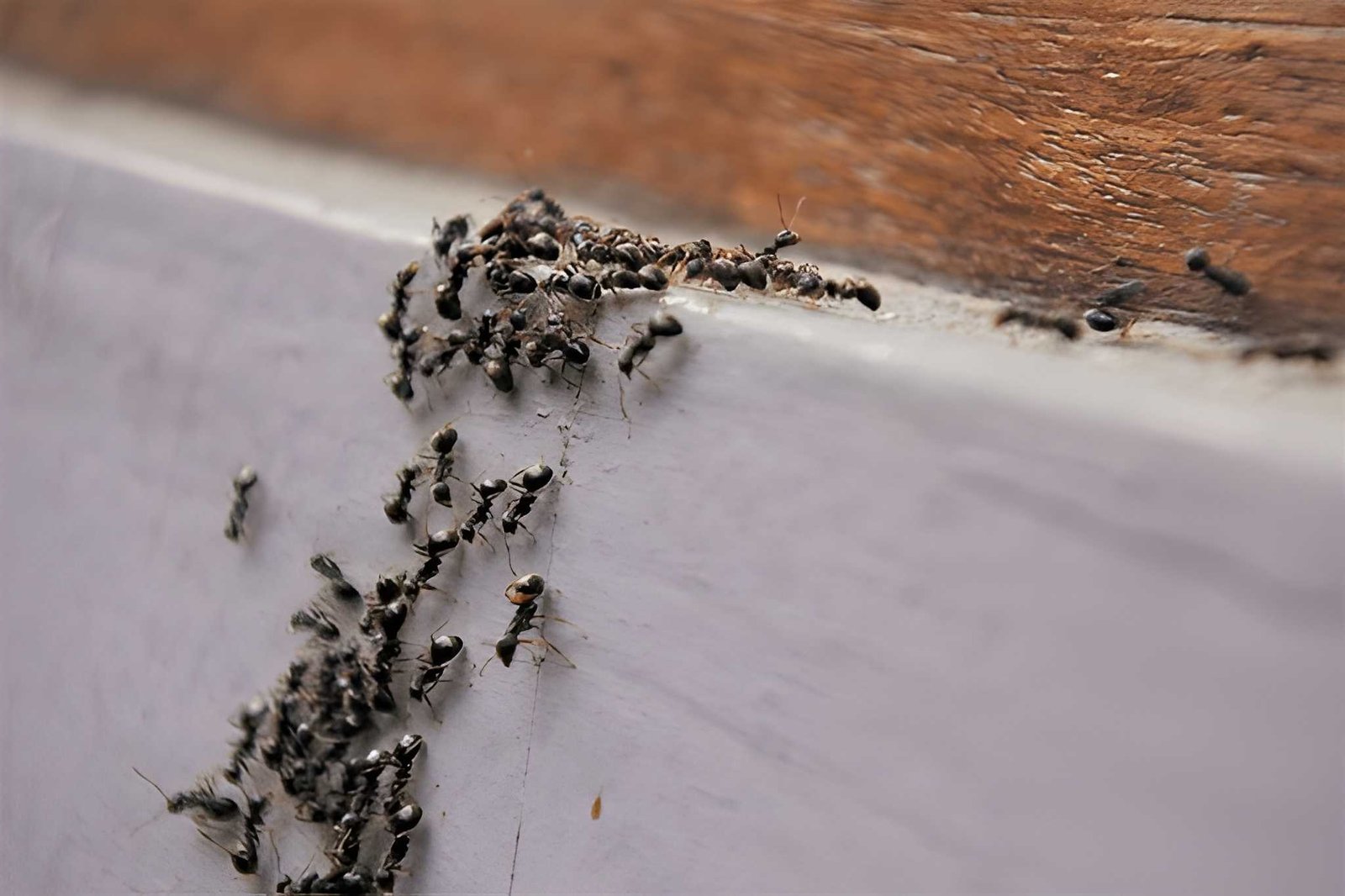
Summer is when many homeowners first notice ants appearing in kitchens, bathrooms, patios, and around windows. At first, it may only be a few ants near the sink or along a wall. Many people assume it is a small problem, but visible ants are often only the surface of a much larger colony nearby.
Across Surrey, Burnaby, Richmond, Langley, Delta, and other parts of Metro Vancouver, warmer weather creates ideal conditions for ant activity. Colonies become more active, food searches increase, and homes offer everything ants need food, moisture, shelter, and easy entry points.
Most ant infestations begin long before ants are seen on the kitchen counter. By the time regular trails appear indoors, the colony is often already established close to the property.
Warm Weather Increases Ant Movement
Ants become much more active during summer because heat supports colony growth and food foraging. Spring and summer are the busiest seasons for reproduction, which means worker ants travel farther from the nest to support a growing colony.
Outdoor heat can also dry out soil and reduce natural water sources. This pushes ants to look for cooler indoor areas where moisture is easier to find. Homes become attractive because they provide stable temperatures and consistent access to food and water.
This is why ant activity often increases suddenly during hot weather, even in homes that have never had pest problems before.
Kitchens Are the Most Common Starting Point
Food is one of the strongest reasons ants enter a home. Small crumbs, sugary spills, grease, fruit, and pet food are all strong attractants. Even clean homes can experience infestations because ants need very little to establish a trail.
Kitchen counters, pantry shelves, under appliances, and garbage bins are common problem areas. Unsealed dry food containers and recycling bins also create easy feeding opportunities.
Outdoor dining areas can make the problem worse during summer. Food residue left on patios, decks, or barbecue spaces often attracts ants first, and from there they begin moving indoors.
Moisture Problems Often Bring Ants Inside
Water is just as important as food. Ants are often drawn to bathrooms, laundry rooms, basements, and under-sink cabinets because these spaces provide moisture and protection.
Leaking pipes, poor drainage, damp crawlspaces, and condensation around windows all create ideal conditions for nesting. Some species, especially carpenter ants, are strongly attracted to moist or damaged wood because it makes tunneling easier.
In many homes across Metro Vancouver, moisture problems are the main reason ants continue returning after treatment.
Small Entry Points Make Access Easy
Ants do not need large openings to enter a home. Tiny cracks in the foundation, gaps around doors and windows, damaged weather stripping, and spaces around utility lines are enough.
Once worker ants find a reliable path to food or water, they leave a chemical trail that guides the rest of the colony. This is why homeowners often notice ants returning to the exact same place every day.
Repeated trails near sinks, baseboards, or windows usually mean the colony is active nearby and the access point has not been addressed.
Outdoor Changes Can Push Ants Indoors
Sometimes the real problem starts outside the home. Heavy rainfall, dry summer heat, landscaping work, and nearby construction can disturb outdoor colonies and force ants to relocate.
Mulch beds, tree stumps, firewood piles, and soil near the foundation are common nesting areas. When these spaces are disturbed, ants often move toward the nearest structure for protection.
Overgrown plants touching the house can also create direct pathways indoors, especially around siding, rooflines, and window frames.
Carpenter Ants Need More Attention
Not all ants create the same level of concern. Carpenter ants are one of the most serious pest problems for homeowners because they tunnel through wood to create nesting galleries.
They do not eat wood like termites, but they weaken structural materials over time. Homes with roof leaks, damp basements, old wooden framing, or water-damaged walls are at higher risk.
In older homes across Burnaby and Langley, carpenter ant activity is often discovered only after visible damage appears. By then, the colony may already be large and difficult to remove without professional treatment.
Why Sprays and Traps Often Don’t Solve the Problem
Many homeowners try ant sprays or bait traps as the first solution. These products may kill the ants that are visible, but they usually do not reach the main nest or the queen.
This creates short-term relief, not long-term control. In some cases, incorrect treatment causes the colony to split and spread into multiple nesting areas, making the infestation harder to manage.
Repeated ant activity in the same locations usually means the source of the infestation has not been removed. For recurring ant infestations, professional ant control becomes necessary.
Long-Term Ant Control Requires More Than Surface Treatment
Ant infestations rarely stop with surface sprays alone. If ants keep returning to the same kitchen corner, bathroom cabinet, or window frame, the colony is usually still active behind walls, under flooring, or outside near the foundation.
Carpenter ants create an even bigger concern because the problem is not only the insects you see, but the hidden nesting inside damp wood and structural spaces. In these cases, proper inspection becomes more important than repeated DIY treatment.
Total Pest Control Ltd helps homeowners across Surrey and Metro Vancouver with professional pest control services by identifying where colonies are nesting, what is attracting them indoors, and how to prevent the infestation from returning. This approach creates long-term control instead of short-term relief.
Prevention Is Easier Than Repeated Infestations
Simple habits can make a big difference. Sealing food properly, cleaning crumbs quickly, fixing plumbing leaks, and trimming vegetation near the home all reduce the conditions ants look for.
Checking foundations, door frames, and moisture-prone areas regularly also helps stop infestations before they become established.
Summer ant problems often begin small, but they grow quickly when ignored.
A Few Ants Usually Mean More Nearby
Ants rarely enter a home without a reason. Food, water, shelter, and easy access create the perfect conditions for colonies to grow quietly in the background. What begins as a few ants near the sink can quickly turn into a larger infestation hidden inside walls or under flooring.
Summer is the most common time for these problems to appear, especially in homes with moisture issues or nearby outdoor nesting areas. Early action makes the biggest difference. When ant trails keep returning or carpenter ants become a concern, proper inspection and targeted pest control help prevent long-term structural and household problems.