Total Pest Control Ltd
For a Free Consultation, Call 604-349-6402

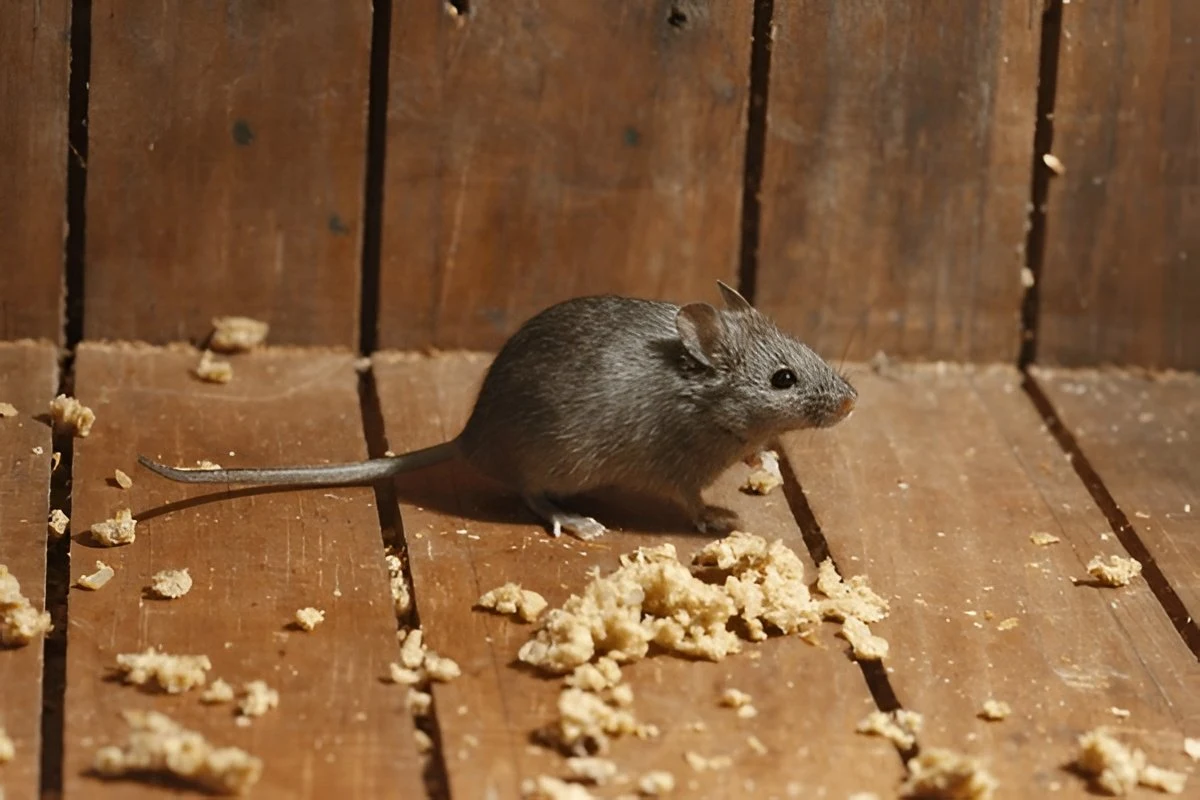
Same-Day Mouse Extermination & Removal Services in Surrey
Hearing scratching inside the walls or ceiling? Finding mouse droppings in the kitchen, garage, basement, or storage areas? Or have you spotted a mouse inside your Surrey property?
As a trusted provider of Pest control in Surrey, Total Pest Control provides professional mice control in Surrey, BC for homes and businesses. Our licensed pest control technicians inspect for mouse activity, identify nesting areas and potential entry points, control the active infestation, and recommend practical steps to help prevent mice from returning. Same-day service is available whenever possible, with targeted solutions backed by our service guarantee.
Mice can remain hidden inside wall voids, attics, crawl spaces, cabinets, and other concealed areas while travelling between their nest and food sources. Catching one mouse does not always mean the infestation is gone, especially when access points remain open. A successful trap confirms that a mouse was using that location; it does not confirm whether other mice are present or whether the access point that allowed it inside has been closed.
If mice keep returning despite traps or other DIY attempts, call 604-349-6402 or complete our contact form to schedule a mouse inspection in Surrey.
Mouse droppings, scratching noises, gnaw marks, nesting material, and repeated sightings are common signs of an active mouse infestation. Because mice are often active when a property is quiet, you may notice the evidence they leave behind before seeing the mice themselves.
Finding several signs in different areas can indicate that mice are travelling between nesting sites, food sources, and access points.
A professional mouse inspection helps determine where mice are active, where they may be nesting, and how they are getting inside. The purpose is not simply to confirm that mice are present, but to identify the activity, conditions, and access routes supporting the infestation.
Mice look for sheltered areas close to food, water, and nesting material. Once inside a building, they can use concealed spaces to move between rooms without being easily detected.
Common nesting and activity areas include:
Mice can enter through small structural openings around a property. Potential access points include foundation gaps, damaged vents, openings around utility penetrations, gaps beneath doors, garage-door seals, and other cracks or openings in the building exterior.
Surrey’s mix of detached homes, townhouses, garages, landscaped properties, and developing residential areas creates different opportunities for mice to find shelter around buildings. Identifying and addressing these access points is an important part of long-term mouse control.
Mouse access can also differ by property type. Detached homes may have entry opportunities around garages, foundations, crawl spaces, and utility penetrations, while townhouses and multi-unit properties may involve shared structural areas and service penetrations. Our inspection follows the layout and condition of the property rather than relying on the same checklist for every building.
Correct identification helps determine where mice may be nesting, how they are moving through the property, and which control methods are appropriate. The species and property conditions are assessed as part of the inspection rather than relying only on the appearance of a mouse.
House mice are strongly associated with indoor infestations because they can establish nests close to food and shelter. Once inside, they may nest in wall voids, insulation, cabinets, storage areas, garages, and other concealed spaces.
Their small size allows them to use gaps around doors, foundations, utility lines, and other structural openings. Droppings, gnawed food packaging, scratching noises, and nesting material are common indicators of activity.
Deer mice are more commonly associated with outdoor and semi-rural environments but can enter buildings in search of shelter. They may be encountered around sheds, garages, storage areas, crawl spaces, and properties near vegetation or undeveloped areas.
Because different rodents can leave similar signs, professional identification helps determine the appropriate control strategy.
A mouse infestation can affect food storage, building materials, electrical components, and sanitation. Mice also reproduce quickly when they have reliable access to food and protected nesting areas, so early control can prevent a smaller problem from becoming more difficult to manage.
Mice travel across floors, waste areas, cupboards, and other surfaces while searching for food. Droppings, urine, and direct contact can contaminate food, packaging, preparation surfaces, and storage areas.
The Public Health Agency of Canada advises against sweeping or vacuuming dry rodent droppings, as disturbing contaminated material can release particles into the air. Food showing evidence of mouse activity should be discarded, and accessible food should be stored in secure containers.
Mice gnaw regularly and may damage electrical wiring, insulation, wood, plastic, cardboard, stored belongings, and food packaging.
Activity inside wall voids, attics, garages, and storage spaces may remain unnoticed until visible damage or other signs appear.
Seeing one mouse does not reveal the full extent of an infestation. Other mice may remain concealed inside walls, ceilings, insulation, crawl spaces, or storage areas.
As long as nesting conditions, food sources, and entry points remain available, mouse activity can continue even after individual mice are trapped.
Mouse traps can catch individual mice, but catching one mouse does not confirm that the infestation has been eliminated. Successful mouse control requires understanding where the rodents are travelling, where they are nesting, and how they are entering the building.
DIY control may be less effective when:
Store-bought repellents or randomly placed traps may reduce visible activity without addressing the conditions supporting the infestation.
Professional mouse extermination and removal combines activity assessment with targeted control, entry-point identification, and prevention.
Mouse control addresses mice that are already active in or around the property, while mouse exclusion addresses the openings that allow them to get inside. Trapping, baiting, or other targeted methods can control the existing infestation, while exclusion focuses on gaps around foundations, doors, vents, utility penetrations, and other structural access points.
Depending on the property, effective long-term mouse management may require both. Removing active mice without addressing accessible entry points can leave the building vulnerable to new mouse activity.
Our professional mice control service follows an Integrated Pest Management (IPM) approach. We combine inspection, targeted rodent control, entry-point assessment, exclusion, monitoring, and practical prevention measures rather than relying on a single control method.
Treatment begins with an inspection of relevant interior and exterior areas.
Our technicians look for evidence such as:
The inspection connects visible evidence with likely nesting areas, travel routes, food sources, and structural access points. This helps determine where control measures should be concentrated rather than placing traps or bait stations without understanding the pattern of activity.
Removing active mice without considering how they entered can leave the property vulnerable to another infestation.
We inspect for potential mouse entry points and access routes, including gaps around foundations, doors, vents, utility penetrations, garages, and other structural openings.
The objective is to connect the evidence found indoors with the routes mice may be using to access the property.
Once activity has been assessed, our technicians select control methods appropriate for the infestation and property.
Depending on the situation, the mouse control plan may include strategically placed traps, bait stations, or other targeted rodent-control methods.
Placement matters. Control devices are positioned according to observed activity, travel routes, nesting areas, and property conditions rather than being placed randomly throughout the building.
Mouse exclusion focuses on reducing the opportunities for mice to enter or re-enter the property.
Where potential access points are identified, our technicians can recommend appropriate measures for sealing or correcting them. This may include gaps around doors, foundations, vents, utility lines, and other exterior openings.
We may also recommend practical changes involving food storage, waste, clutter, vegetation, or other conditions that provide mice with food or shelter.
Combining mouse removal with entry-point exclusion and prevention provides a more complete approach than repeatedly trapping mice after they get inside.
Rodent activity may require monitoring after the initial treatment. Where follow-up is needed, we assess whether activity is continuing and adjust the control plan accordingly.
Monitoring helps distinguish between declining activity and an infestation that still has active mice, nesting areas, or unresolved access points. Where necessary, the control or exclusion plan can then be adjusted based on what the technician finds.
Total Pest Control provides professional mice control for homes, townhouses, apartments, strata properties, offices, warehouses, retail spaces, and other commercial properties throughout Surrey.
Residential infestations commonly involve kitchens, garages, basements, attics, crawl spaces, and storage areas. Commercial mouse control may require additional attention to food storage, waste areas, loading areas, utility access, and other conditions that support rodent activity.
Every property is different, so our technicians base the treatment plan on the infestation, building layout, mouse activity, and potential entry points rather than applying the same approach to every job.
Mouse control works best when the active infestation and the conditions allowing mice inside are addressed together. Total Pest Control combines professional inspection, targeted control, entry-point assessment, and practical prevention recommendations.
Our pest management technicians are trained to identify mouse activity, locate likely nesting and travel areas, and determine appropriate control methods for the property.
We don’t focus only on the mouse you have seen. We inspect for droppings, gnaw marks, nesting areas, travel routes, food sources, and potential structural access points.
Treatment is based on the location and level of activity. Traps, bait stations, and other control measures are positioned strategically according to evidence found during the inspection.
Controlling existing mice is only one part of the process. Identifying entry points and reducing access to food and shelter helps lower the risk of mice returning.
If you need a mouse exterminator in Surrey, we offer same-day appointments whenever scheduling allows so the infestation can be assessed as soon as possible.
Treatment methods are selected according to the infestation and property conditions, with environmentally responsible options available where appropriate. Our technicians explain any precautions that need to be followed around children, pets, employees, or customers.
Our mouse control services are backed by our service guarantee, giving you additional confidence in the treatment and support provided by our team.
Mouse droppings, scratching noises, gnaw marks, damaged food packaging, nesting material, tracks, grease marks, and sightings are common signs. An inspection can determine where mice are active and whether the evidence indicates an established infestation.
Mice can use gaps around foundations, doors, vents, utility penetrations, garage areas, and other structural openings. Our technicians inspect potential access points and compare them with signs of activity inside the property.
Traps may remove individual mice without addressing hidden nesting areas or the openings being used to enter the building. If access points remain available, additional mice can continue entering even after trapped mice are removed.
Entry-point identification and exclusion are important parts of long-term mouse control. We inspect for potential access points and recommend appropriate sealing or rodent-proofing measures based on the property and the openings found.
The time required depends on the extent of the infestation, nesting locations, property layout, entry points, and response to the control measures. Some infestations require monitoring and follow-up rather than a single visit.
Treatment methods are selected according to the property and infestation. Products and control devices are used according to applicable directions, and your technician will explain any precautions required for children or pets.
This depends on the control methods required. Your technician will explain the treatment beforehand and tell you whether any preparation, temporary access restrictions, or other precautions are necessary.
Yes. We provide mouse control for offices, restaurants, retail properties, warehouses, strata buildings, and other commercial premises. The control plan is adapted to the building, mouse activity, access points, and operational requirements.
If you’re hearing scratching in the walls, finding mouse droppings, or repeatedly catching mice without solving the problem, there may still be active mice or open entry points around the property.
Total Pest Control provides professional mice control in Surrey focused on finding the source of the infestation, controlling active mice, identifying access points, and helping reduce the risk of reinfestation.
Call 604-349-6402 or complete our contact form to schedule a mouse inspection. Same-day mice control in Surrey is available whenever possible.