Total Pest Control Ltd
For a Free Consultation, Call 604-349-6402

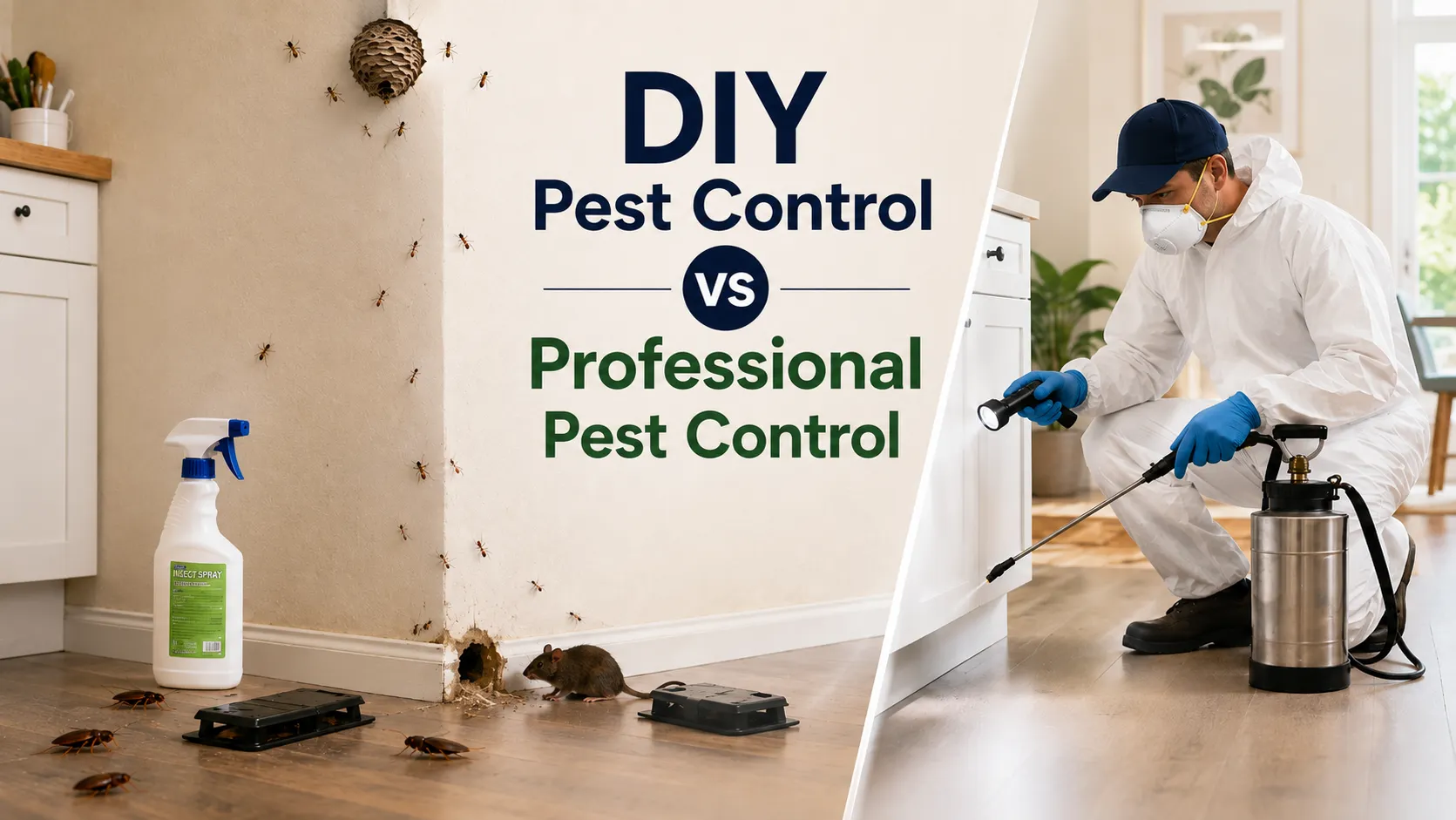
DIY pest control works best for prevention and small, isolated pest problems. Professional pest control is more suitable when pests are unidentified, hidden inside a building, spreading between areas or returning after treatment.
The right option depends on the pest species, infestation size, property design and treatment risk. Cleaning, removing attractants and sealing minor gaps can reduce pest activity. Established infestations often require inspection, targeted treatment, exclusion and follow-up.
DIY pest control uses preventive measures and products applied by the property owner. Common methods include store-bought traps, ant baits, insect sprays, cleaning, waste management and basic gap sealing.
Professional pest control starts with identification and inspection. A technician assesses the pest species, infestation extent, harbourage areas, movement routes, structural entry points and environmental conditions before recommending treatment.
The main difference is not limited to the product being used. It is whether the approach targets visible pests alone or also addresses the nest, population, entry routes and conditions supporting the infestation.
DIY pest control includes preventive actions and consumer pest-control products.
Common measures include:
Prevention and treatment serve different purposes. Cleaning and exclusion reduce access to food, water and shelter. Traps, baits and sprays target active pests.
Pest-control products authorized for use in Canada carry a Pest Control Product registration number and an approved label. The label identifies where, how and against which pests the product can be used.
Professional pest control combines inspection, identification, treatment and prevention.
A professional service may include:
Not every infestation requires every step. The treatment plan depends on the pest, property design, infestation level and access to affected areas.
This inspection-led approach reflects integrated pest management principles. The Province of British Columbia describes IPM as a system that combines prevention, regular inspection and appropriate control measures for the specific site rather than relying on ongoing treatment alone.
| Factor | DIY pest control | Professional pest control |
|---|---|---|
| Initial cost | Usually lower | Usually higher |
| Pest identification | Based on visible signs | Based on inspection and pest evidence |
| Treatment scope | Usually targets accessible activity | Can address nests, harbourages and entry routes |
| Product selection | Limited to consumer products | Selected for the pest and treatment location |
| Structural inspection | Usually limited | Covers relevant interior and exterior areas |
| Safety planning | Depends on correct label use | Includes controlled placement and occupant instructions |
| Monitoring | Managed by the property owner | Included when required by the treatment plan |
| Exclusion | Limited to obvious gaps | Based on identified access points |
| Works across pest types | Better for ants, wasps, rodents on the surface | Better suited to cockroaches, bed bugs, squirrels and fleas, where hidden nesting or a source animal is usually involved |
| Best suited for | Prevention and isolated activity | Hidden, established or recurring infestations |
DIY treatment is not unsuitable for every pest sighting. Professional treatment is also unnecessary for every insect found outdoors. The decision depends on whether the problem can be identified, contained and corrected safely.
DIY pest control can be reasonable when activity is minor, accessible and connected to an obvious condition.
Examples include:
Municipal guidance from the City of Surrey recommends securing food and food waste, using rodent-resistant bird feeders and cleaning seed that falls onto the ground. These steps reduce rodent attractants but do not eliminate an established indoor infestation.
DIY measures are more appropriate when you can answer four questions:
Professional inspection becomes more valuable when one or more answers remain uncertain.
DIY treatment becomes less reliable when the problem extends beyond the visible activity.
Warning signs include:
Killing one insect or catching one rodent can reduce immediate activity. It does not confirm that the wider nest, colony or population has been eliminated.
Across Metro Vancouver and the Fraser Valley, visible pest activity is often only one part of the infestation. Our technicians commonly find concealed nests, structural entry gaps, accessible food sources, moisture conditions or movement between attached units.
Common inspection findings include:
These conditions explain why repeated spraying or trapping may reduce sightings without resolving the source.
DIY pest control usually has a lower initial cost because the property owner purchases and applies the product.
The total cost can increase when:
Professional pest control has a higher initial cost. Pricing depends on the pest species, infestation size, property access, treatment method, exclusion requirements and follow-up.
The useful comparison is not between one store-bought product and one service visit. It is between the total cost, time and effort required to resolve the infestation.
DIY pest control depends on correct product selection, placement, storage and label use.
Health Canada identifies the Pest Control Product number as a sign that a product has been authorized. Using an unregistered pesticide or applying a registered product contrary to its label can violate the Pest Control Products Act.
Potential DIY safety problems include:
Professional treatment still requires occupant cooperation. Residents must follow preparation, restricted-access and re-entry instructions provided for the treatment.
Some pest problems remain isolated and accessible. Others involve hidden nests, structural gaps or movement between rooms and neighboring properties.
Professional inspection is more appropriate when ants return, winged ants appear indoors or frass collects near structural wood.
Our technicians often find that recurring carpenter ant activity continues because the nest location or moisture-damaged material has not been identified.
Outdoor wasp activity does not always require treatment. Professional wasp control help is safer when a nest is concealed, below ground, above working height or close to an entrance.
A single cockroach sighting does not always confirm an established infestation, but repeated sightings, activity during daylight hours, or droppings near food storage areas usually indicate a larger population hidden behind walls, under appliances, or inside plumbing voids.
Professional treatment becomes more appropriate when cockroaches are found in multiple rooms, activity continues after store-bought bait use, or the infestation affects a shared wall in a strata or multi-unit property.
Our technicians commonly find that cockroach populations persist because egg cases in wall voids and under appliances are never reached by surface-level products.
Professional mouse control becomes more suitable when droppings return, scratching occurs inside walls, or multiple entry points are present.
Public health guidance recommends monitoring for continued droppings, urine spots, or gnawing in the days following trapping, since their presence after treatment is a reliable sign the infestation has not been fully resolved.
Professional treatment is more appropriate when traps remain untouched, burrows appear, or activity affects a strata or commercial property.
Our technicians commonly find that rat problems continue when food sources and building entry points are treated as separate issues rather than parts of the same infestation.
Squirrels differ from other rodents in that they typically enter through roof and attic access points rather than ground-level gaps, often exploiting damaged soffits, vents, or gaps where rooflines meet siding.
Professional removal is more appropriate when scratching or movement is heard in the attic during daylight hours, when chewed wiring or insulation is found, or when the entry point cannot be located and sealed safely. Squirrels are also protected under certain provincial wildlife regulations, which affects how removal and exclusion can be carried out.
Flea activity often follows an existing pet, rodent, or wildlife issue, which means treating the fleas alone without addressing the source animal or entry point typically leads to the infestation returning.
Professional treatment is more appropriate when fleas are found in multiple rooms, bites continue after cleaning and vacuuming, or the source of the infestation cannot be confirmed.
Professional treatment becomes more appropriate when live insects are confirmed, several rooms are affected, or activity returns after DIY treatment.
Bed bug control is widely recognized as a complex process that can take weeks to months to fully resolve, depending on the extent of the infestation.
The main risk is treating the wrong pest, location, or source, which can delay accurate identification and allow the infestation to continue growing while it appears to be under control.
Rodent waste also requires careful handling. Public health guidance advises against disturbing dry rodent droppings or nesting material before proper disinfection, since airborne particles from disturbed waste can pose a respiratory health risk.
The correct treatment depends on the biology, nesting behaviour, and movement patterns of the identified pest.
A professional assessment confirms the pest species, measures the extent of activity and identifies relevant harbourage, entry routes and site conditions.
It can also determine whether the problem involves structural voids, shared areas, sanitation issues or several possible access points.
For a full explanation of the inspection, treatment and follow-up process, read our complete what pest control is and how it works guide.
Pest activity usually returns because one or more parts of the infestation remain unresolved.
Common causes include:
Professional treatment may combine trapping, bait placement, targeted product application, sanitation advice, moisture correction, structural exclusion and monitoring.
The objective is to control active pests while reducing their access to food, water, shelter and suitable nesting areas.
Professional inspection becomes more valuable as the infestation becomes less visible, less accessible or more widespread.
Property design and surrounding conditions influence whether a pest problem can be handled through basic DIY measures or requires a wider professional inspection.
Across Metro Vancouver and the Fraser Valley, relevant property conditions include:
These conditions can allow pests to nest outside the visible treatment area or move between neighboring properties. Professional inspection becomes more valuable when the infestation involves shared spaces, inaccessible voids or several possible entry points.
Pest activity varies according to building density, land use, moisture, vegetation and property design.
High-rise and low-rise strata properties can allow pests to move through shared utility routes, service rooms and waste areas. Commercial corridors can also create food and harbourage opportunities for rodents, cockroaches and insects.
Detached houses, larger lots, garages, sheds and semi-rural surroundings can create several exterior nesting and entry areas. Stored materials, vegetation and nearby fields may increase rodent and squirrel pressure around buildings.
Industrial areas, warehouses, agricultural land and waterfront conditions can create exterior harbourage and drainage-related pest activity. Treatment may need to include the property perimeter as well as the interior.
Moisture, drainage infrastructure, warehouses and food-related commercial activity can contribute to recurring ant, cockroach, rodent and insect pressure. Shared waste areas and service routes may connect activity across a site.
Detached houses, townhouses, garages, crawlspaces and expanding residential developments can contain several pest entry points, including roofline access used by squirrels. Shared service routes in strata properties may also allow cockroach or bed bug activity to move between units.
These local differences affect inspection priorities, but they do not change the core decision. Hidden, recurring and building-wide infestations require a broader approach than treating the visible pest alone.
DIY prevention and professional treatment can work together.
Property owners can support a treatment plan by:
A technician can manage pest identification, inaccessible harbourages, controlled treatment placement, monitoring and exclusion planning.
Residents should avoid applying additional sprays or moving traps and baits during an active professional treatment plan. These actions can alter pest behavior and interfere with monitoring.
Contact a pest control company when an infestation cannot be identified, contained or corrected through basic preventive measures.
Professional assessment is appropriate when:
The City of Surrey advises residents to contact a wildlife control agency or certified pest management company after noticing a rat or mouse problem.
DIY pest control works best for prevention and small problems with an identifiable source. It becomes less reliable when pests are nesting inside the structure, entering through several points or returning after treatment.
Professional pest control provides a wider approach through identification, inspection, targeted treatment, exclusion and monitoring. The right option depends on the pest species, infestation extent, property type and treatment risk.
Property owners who cannot locate the source or confirm that activity has stopped should arrange a professional inspection.
Not sure whether your pest problem needs professional treatment? Contact Total Pest Control Ltd for pest control services across Metro Vancouver and the Fraser Valley.
