Total Pest Control Ltd
For a Free Consultation, Call 604-349-6402

If you already have exterior rodent bait stations around your home or business, include them in your fall maintenance checks. Bait may have been consumed, moisture may have affected its condition, or a station may have been damaged or moved since its last service. A box beside the building does not, on its own, confirm that rodent control is still effective.
Having your stations inspected and refilled where needed helps you address problems before you discover signs of rodents indoors. The visit should also identify food sources, shelter and entry points that could undermine treatment.
For properties across the Lower Mainland, fall preparation should combine station maintenance with practical steps to make buildings less accessible to rats and mice.
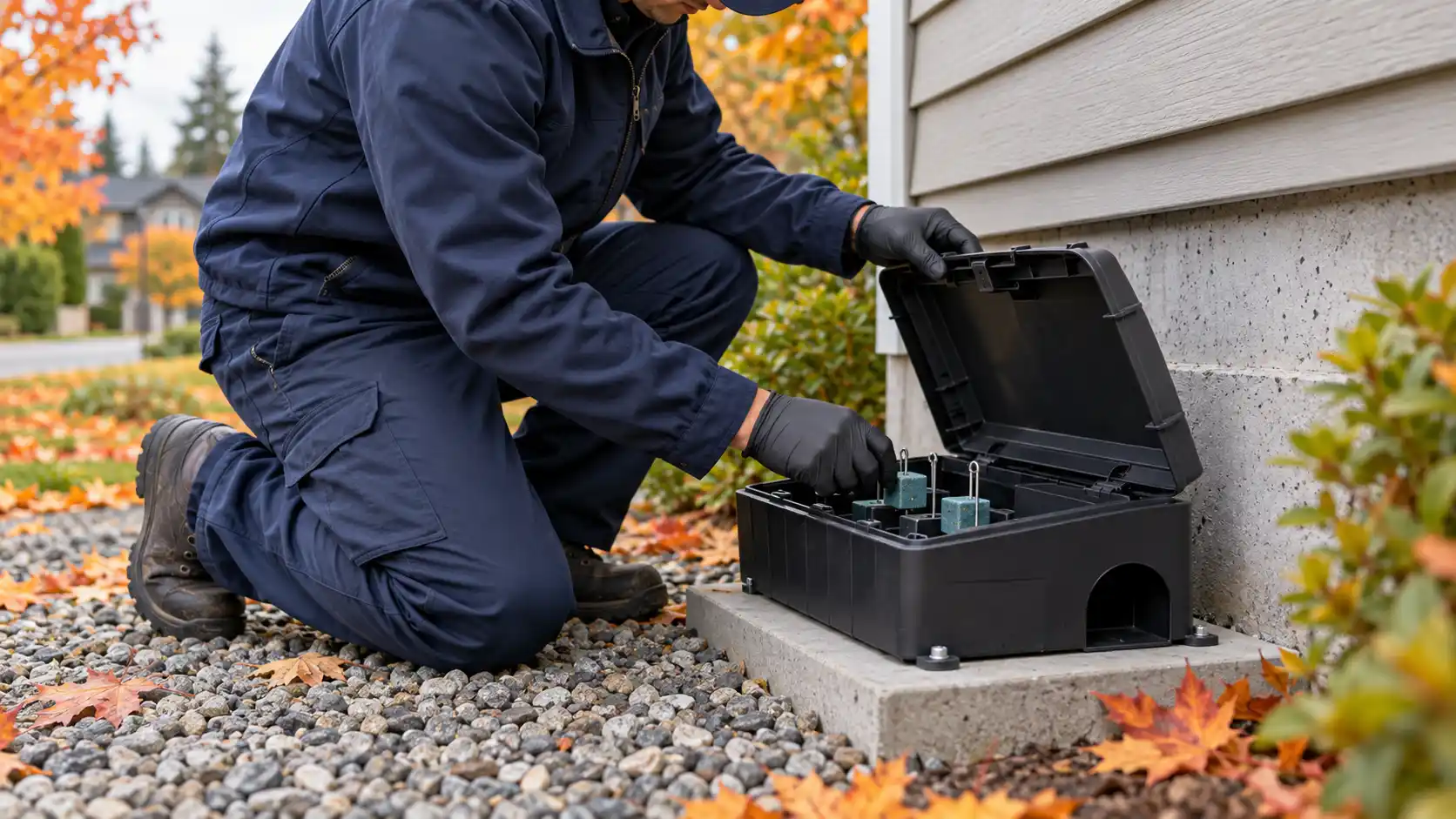
Rats and mice seek food and shelter around buildings, and existing weaknesses can become a problem when rodents find their way inside. Checking your stations before fall gives you an opportunity to review activity and address maintenance issues early.
This is especially useful if the stations have not been serviced recently or you do not know when they were last checked. Waiting until you notice indoor droppings, gnawing or scratching means the inspection may need to address an indoor infestation as well as activity outside.
Rodent problems can occur throughout the year, so fall should be a prompt to review your prevention measures rather than the only time you pay attention to them. Health Canada recommends addressing access, food and shelter as part of controlling rats and mice.
Refilling replaces consumed bait or bait that is no longer suitable for use. Before adding more, the station and surrounding area need to be inspected to establish whether continued baiting is appropriate.
During a service visit, the checks should cover:
Health Canada guidance on tamper-resistant bait stations requires regular inspection of stations used with commercial rodenticides and replacement of damaged stations so they remain tamper-resistant.
Simply topping up a neglected station can leave damaged equipment, unsuitable placement or the cause of continuing activity unresolved.
An overdue or unknown service history is a good reason to arrange an inspection. You do not need to open the station yourself to decide whether to contact a pest control company.
From outside the enclosure, look for visible damage, a lid that appears unsecured, a station that has been displaced or water collecting around its position. Let your technician know if gardening, landscaping or building work has changed the surrounding area.
New rodent sightings, droppings or gnawing around the property also warrant a review, even if your stations were serviced recently. If previous visits have recorded repeated bait depletion, the inspection should investigate why activity is continuing.
Keep children and pets away from damaged stations and report the problem promptly. A tamper-resistant enclosure needs to remain intact and properly secured.
There is no single refill schedule that suits every property. Timing depends on the product’s label directions, bait consumption, bait condition and the findings from previous inspections.
An inspection does not always require a refill. The existing bait may still be suitable, or the findings may indicate that placement, trapping, exclusion work or another part of the control plan needs attention.
Equally, an untouched station does not prove that rodents are absent. Activity elsewhere on the property and alternative food sources need to be considered. The aim is to maintain an effective, monitored treatment plan. Your service schedule should reflect what is happening at the property rather than rely on automatic top-ups.
Outdoor stations should be suitable for weather exposure, but they still need inspection. Damage, water pooling or a poorly chosen location can create problems that refilling alone will not resolve.
For example, a station positioned beside a leaking downpipe may need its location reviewed. If moisture has affected the bait, the source of that moisture should be addressed before the same issue happens again.
Health Canada specifies weather-resistant construction for Tier 1 stations used outdoors where children, pets and non-target wildlife may have access. Weather resistance helps protect the enclosure; it does not make the equipment maintenance-free.
Before refilling any station, you need to identify the product it contains, understand its approved uses and establish whether you are permitted to use it. Do not add an unknown product or assume that any rodent bait is suitable for an existing enclosure.
If your stations are professionally maintained, leave them secured and arrange a service visit before changing their contents or position. Commercial-class rodenticides are restricted to authorized users, and pesticide use must follow the approved label.
British Columbia also prohibits most residential and commercial uses of second-generation anticoagulant rodenticides. Product selection must follow provincial restrictions as well as label requirements.
Professional help is particularly useful when:
An inspection can establish whether refilling is needed and whether the wider control plan needs changing.
Exterior bait stations cannot physically prevent rodents from entering a building. To stay ahead of a developing problem, combine servicing with maintenance that reduces access to food and shelter.
Secure food and waste. Keep rubbish and organics containers closed, clean up spills and avoid leaving pet food outdoors. Clear fallen bird seed around feeding areas.
Check the building exterior. Pay attention to garage door seals, damaged vents and openings around pipes or cables. Arrange suitable repairs where access points are identified.
Make the perimeter easier to inspect. Reduce clutter against exterior walls and keep access to existing stations clear without moving them.
Report changes early. Tell your technician where you have seen rodents or found fresh signs of activity. This helps focus the inspection on the areas that need attention.
The City of Surrey’s rodent prevention guidance similarly recommends securing food and waste, checking garage doors and repairing building openings. These are useful measures alongside a professionally managed control program.
If your exterior bait stations have not been checked recently, arrange a service before signs of rodents appear indoors. Checking now allows time to replace damaged equipment, replenish bait where needed and address conditions that could allow activity to continue.
If you have noticed rodent activity around your home or business, explore our rat control and mice control services for help with treatment and preventing further entry.
Whether you own a home in Surrey, Langley or White Rock, manage a strata property in Vancouver, Burnaby or New Westminster, or run a business elsewhere in the Lower Mainland, Total Pest Control Ltd can help you prepare for fall rodent activity. Our service area also includes Richmond, Delta, Maple Ridge, Pitt Meadows, Abbotsford, Coquitlam, Port Coquitlam and Port Moody, with exterior bait station inspections and refilling where needed for homes, strata properties and commercial premises throughout these communities.
Contact our pest control experts to book an exterior bait station inspection, arrange refilling or discuss a new installation where appropriate. Get your property ready for fall with a rodent control plan suited to your home or business.