Total Pest Control Ltd
For a Free Consultation, Call 604-349-6402

Pest control is the process of identifying, managing and preventing organisms that threaten health, property, food safety or normal building use. It combines inspection, monitoring, sanitation, physical controls, exclusion and targeted treatment according to the pest species and site conditions.
Pest control does not always involve pesticide application. The correct approach depends on the pest, infestation extent, property type, access routes and risks to occupants, pets and non-target animals.
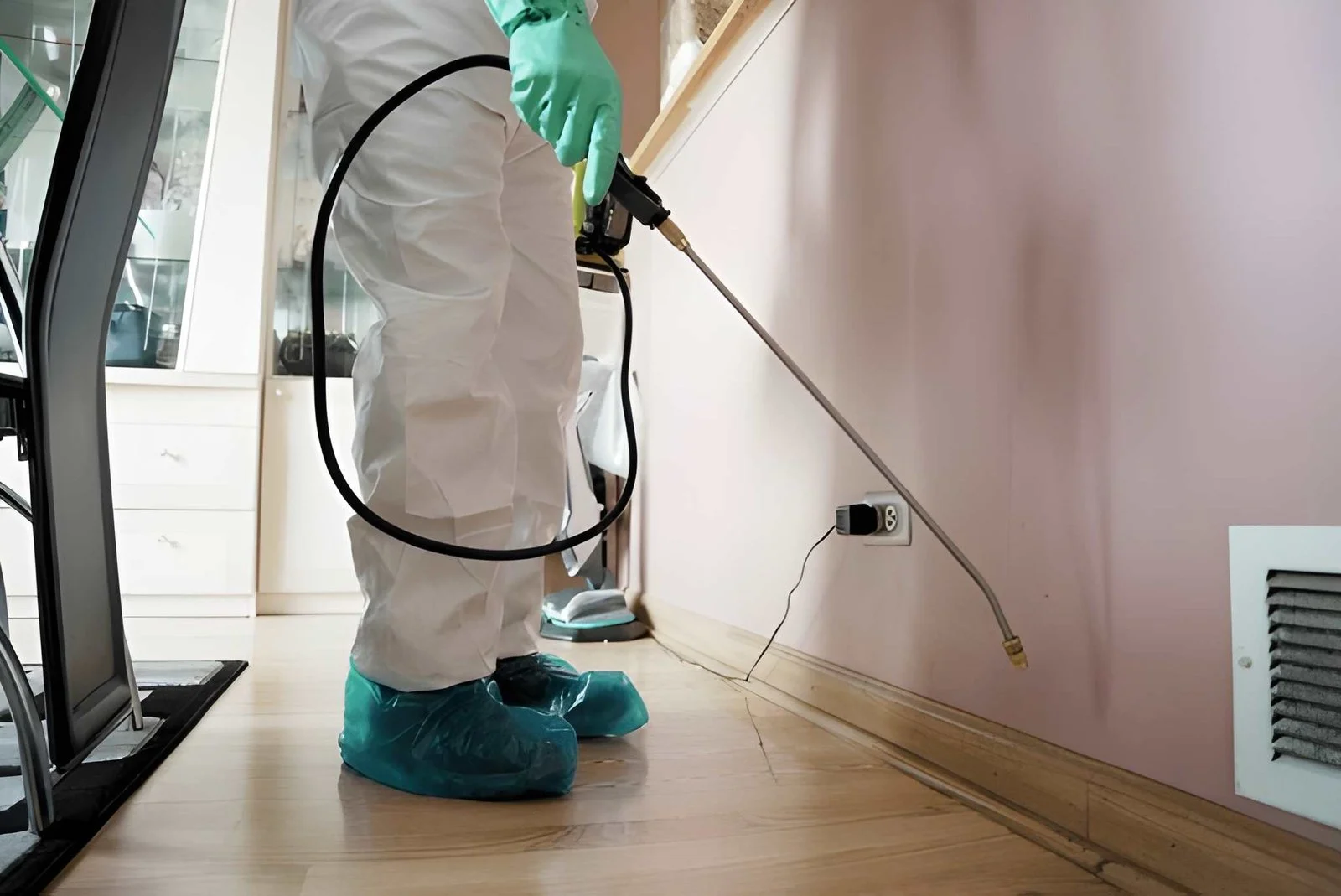
Pest control includes planned actions used to identify, reduce, remove or prevent unwanted pests within a defined area.
It can address pest activity in:
A pest-control plan may use monitoring, cleaning, repairs, traps, barriers, physical removal or registered pest-control products. The method must match the target pest and the conditions supporting its activity. The Province of British Columbia describes structural pest control as the management of pests that invade homes, buildings, yards and other occupied spaces.
An organism becomes a pest when its presence creates a health, property, sanitation, food-safety or operational problem. The same organism may require a different response depending on where it is found. A wasp feeding on flowers away from people does not create the same concern as a colony defending a nest beside a doorway.
Common structural pests include:
Correct identification matters because these pests differ in their biology, movement, harbourage and response to treatment.
Pest control protects people, property and the normal use of a building.
Pests can contaminate food, surfaces and storage areas. They may also expose occupants to bites, stings, allergens, droppings or nesting debris.
The level of concern depends on the species, evidence present and affected area. A confirmed pest in a food-preparation room requires a different response from an isolated outdoor sighting.
Rodents can gnaw building materials, stored items and wiring. Carpenter ants excavate galleries in damaged or moisture-affected wood. Squirrels and other wildlife can enter roof spaces through structural openings.
Pest control identifies both the active pest and the building conditions allowing access or harbourage.
Restaurants, warehouses, retail premises and food-related businesses require effective sanitation, storage, waste control and pest monitoring.
Pest activity can affect stock, equipment, customer areas, staff spaces and regulatory compliance.
Pests can make bedrooms, kitchens, gardens, patios, storage spaces and workplaces difficult to use. Early identification helps determine whether basic prevention is enough or whether treatment is required.
Professional pest control follows a structured process. The exact treatment varies, but the core stages remain consistent.
Pest identification determines which species is present and which control methods are appropriate.
A technician may assess:
One sign does not always provide a definitive answer. Droppings, bites or property damage may require additional evidence before the pest can be confirmed.
The property inspection identifies where pests are active and which site conditions support them.
The inspection focuses on areas connected to the reported activity, likely entry routes and pest behaviour. Depending on the property and species, this can include interior rooms, structural voids, exterior openings, waste areas, moisture sources and shared building routes.
The objective is not to inspect every part of every property in the same way. It is to trace the pest’s activity from visible evidence to its likely harbourage, access point or supporting condition.
The infestation assessment determines whether activity is isolated, established, recurring or connected to other areas.
The technician considers:
This stage prevents a minor sighting and an established infestation from receiving the same response.
The treatment plan matches the pest, site and infestation conditions.
Planning can account for:
Treatment planning also determines whether occupants need to prepare or temporarily avoid an area.
Treatment targets the identified pest using one or more suitable control methods.
Depending on the situation, treatment may include:
The method must be suitable for the target pest and approved treatment location.
Exclusion and site correction reduce the conditions that allow pest access and survival.
These measures can include:
Exclusion must be planned around the pest. Closing an active entry point without understanding where the animal is located can create a different problem inside the structure.
Monitoring checks whether activity has stopped and whether additional action is required.
Follow-up may include:
Some infestations require one treatment plan. Others require monitoring or repeated visits because of pest life cycles, structural access or activity beyond the initial area.
Pest-control methods fall into several categories. A treatment plan may combine two or more categories.
Inspection and monitoring identify pest activity before and after treatment.
Methods can include:
Monitoring helps determine whether treatment is required and whether the selected control method is working.
Sanitation removes food, water and shelter that support pest activity.
Examples include:
Sanitation may resolve an attractant, but it does not remove every established nest or population.
Physical controls capture, remove or block pests without relying entirely on pesticide application.
Methods include:
The correct physical method depends on the pest and affected area.
Exclusion prevents pests from entering or moving through a building.
Common exclusion points include:
Exclusion works best after the pest species and active routes have been identified.
Biological control uses natural organisms or biological processes to reduce pest populations.
It is more common in agricultural, garden and landscape pest management than in indoor structural treatment. Examples include beneficial organisms that prey on or disrupt a target pest.
British Columbia’s home and garden pest-management resources include prevention and biological control within a wider pest-management approach.
Chemical control uses registered baits, dusts, residual products and other pesticides selected for a specific pest and treatment site.
In Canada, only registered pesticides assessed by Health Canada are permitted for sale and use. Registered products display a Pest Control Product number, and the label identifies the target pest, permitted location and directions for use.
Chemical treatment forms one part of pest control. It does not replace identification, inspection or prevention.
Heat and other temperature-based methods can affect pests and their life stages without relying solely on conventional pesticide application.
These methods require controlled temperatures, suitable equipment and access to affected materials or rooms. Their use depends on the pest and property conditions. Bed bug treatment is one example where heat may form part of a wider treatment plan, but it is not the only available method.
Integrated pest management, or IPM, combines pest identification, monitoring, prevention and appropriate control methods. It does not prohibit pesticides; it uses them selectively when they fit the pest, site and treatment objective.
For a full explanation of IPM principles and treatment thresholds, read our What Is Integrated Pest Management guide. British Columbia regulates pest management through the Integrated Pest Management Act and related requirements.
No. Pest control can involve sanitation, exclusion, traps, monitoring, physical removal and environmental changes without pesticide application. A pesticide may be used when it is suitable for the identified pest and site. The treatment may also combine pesticide use with:
Health Canada registers pest-control products only when scientific evidence supports their acceptable use according to the approved label.
Pest-control methods change according to species, harbourage and movement.
| Pest | Main assessment | Common control approach |
|---|---|---|
| Ants | Species, trails, nest location and moisture | Baiting, targeted treatment, sanitation and nest-area correction |
| Wasps | Nest location, access and sting risk | Nest treatment or removal and later exclusion |
| Mice | Droppings, movement routes and entry gaps | Trapping, monitoring, sanitation and exclusion |
| Rats | Species, burrows, runways and exterior pressure | Trapping or controlled baiting, harbourage reduction and exclusion |
| Bed bugs | Confirmed evidence, hiding areas and room distribution | Pest-specific treatment, preparation and follow-up |
| Cockroaches | Species, food, moisture and harbourage | Baiting, monitoring, sanitation and targeted treatment |
| Squirrels | Entry point, nesting area, species and building access | Humane removal, one-way exclusion and structural repair |
| Fleas | Host animal, affected areas and life-cycle stage | Host treatment, environmental treatment, vacuuming and follow-up |
| Spiders | Species, web locations, prey activity and entry routes | Web removal, prey reduction, exclusion and targeted treatment |
| Other insects | Species, source, harbourage and site conditions | Identification-led treatment, sanitation, exclusion or monitoring |
These summaries explain the general control logic. Dedicated pest service pages should provide the detailed signs, risks, treatment methods and preparation requirements for each pest.
Property design affects how pests enter, move and remain hidden.
Detached houses may require inspection of:
Several exterior sides and yard features can create access or harbourage.
Attached properties may allow pests to move through:
Treatment may require coordination beyond the unit where activity was first reported.
Apartment pest control can involve individual units, common areas and building-management responsibilities.
Inspection may need to consider:
Food businesses require close attention to:
Pest control must support food safety without disrupting normal operations unnecessarily.
Warehouses can contain:
The inspection area may extend beyond the location where damage or droppings appear.
Offices and shops may experience pest activity around:
Preparation depends on the pest and treatment method.
Property owners may be asked to:
Do not begin extensive preparation until the pest and treatment method have been confirmed. Moving furniture or belongings can spread some pests or remove useful inspection evidence.
During treatment, the technician confirms the findings and applies the selected control measures.
The visit may involve:
Occupants may need to avoid specific areas during application or remain outside the property for a defined period. Instructions depend on the product and method used.
Aftercare helps preserve treatment effectiveness and identify continued activity.
Property owners may need to:
Health Canada provides pest-specific guidance for post-treatment monitoring, including continued inspection after bed bug treatment.
Pest-control timing depends on the species, infestation extent, treatment method, building design and monitoring results.
Important variables include:
A trap may capture a rodent immediately without confirming that all activity has stopped. Ant bait requires feeding and transfer. Bed bug control may require repeated inspection because insects can occupy several hiding areas. A universal treatment timeline would therefore be misleading.
Pest-control frequency depends on the evidence of activity and the property’s risk conditions.
Service types include:
An isolated household problem may require one treatment plan and monitoring. A food premise, warehouse or property with recurring exterior pressure may need regular inspections. Routine pesticide application is not the same as pest prevention. Monitoring and correcting site conditions can reduce unnecessary treatment.
Pest control requires method selection, controlled placement and compliance with product instructions.
Health Canada evaluates registered pesticides for health, environmental risk and effectiveness under their approved conditions of use. Consumers and professionals must follow the product label.
Safety considerations include:
No pest-control method should be described as completely risk-free. Safety depends on the pest, control method, property and correct use.
Pests can return when access, food, water, shelter or outside pressure remains.
Recurrence can result from:
Read Also: Why DIY Pest Control Fails Long-Term
Property patterns across Metro Vancouver and the Fraser Valley affect pest access and harbourage.
Relevant regional conditions include:
| Area pattern | Pest-control consideration |
|---|---|
| Dense strata and mixed-use areas | Shared walls, service routes and coordinated access |
| Detached suburban properties | Garages, crawlspaces, decks and exterior gaps |
| Semi-rural boundaries | Outbuildings, vegetation and rodent harbourage |
| Waterfront and drainage areas | Moisture and exterior pest pressure |
| Warehouses and food premises | Deliveries, storage, waste and perimeter monitoring |
These factors should be developed further on individual location pages. The underlying pest-control process remains identification, inspection, assessment, treatment, prevention and monitoring.
Professional assessment is appropriate when the pest cannot be identified, activity extends into inaccessible or shared areas, treatment creates a safety concern or the problem continues after basic corrective measures.
For a complete decision framework based on identification, infestation extent, accessibility, safety and property complexity, you can also read DIY Pest Control vs Professional Pest Control comparison.
Pest control identifies, manages and prevents organisms that threaten health, property, sanitation, food safety or normal building use. It addresses active pests and the conditions that provide access, food, water, shelter or suitable harbourage.
Pest control manages existing activity. Pest prevention reduces the conditions that allow future activity. Prevention can include sanitation, waste management, moisture correction, monitoring and structural exclusion.
No. Pest control can use inspection, traps, physical removal, cleaning, barriers, exclusion, heat and monitoring. Registered pesticides may form part of a treatment when they suit the identified pest and site.
A technician examines pest evidence, likely harbourage, movement routes, entry points and supporting conditions. The findings determine the species, infestation extent and appropriate combination of treatment, exclusion, sanitation and monitoring.
One treatment may resolve some isolated problems. Established infestations can require follow-up because of pest life cycles, inaccessible harbourage, shared units, open entry points or activity beyond the initial treatment area.
Safety depends on the selected method, controlled placement and compliance with preparation and re-entry instructions. Inform the technician about children, pets, aquariums or other concerns before treatment.
Some treatments allow occupants to remain in unaffected areas. Others require temporary evacuation or restricted access. The technician should provide instructions based on the selected product and application method.
Preparation depends on the pest and treatment. Common requirements include providing access, securing food, reducing clutter and protecting pets. Follow the instructions supplied for the specific service rather than using a general checklist.
Pests can return through open entry points, shared building routes, nearby populations or reintroduction. Food, water, moisture and harbourage can also continue to support activity.
Inspection frequency depends on property risk and evidence. A residence may need an inspection after signs appear, while restaurants, warehouses and other higher-risk properties may require scheduled monitoring.
Pest control is not one product or treatment method. It is a process that starts with accurate identification and continues through inspection, assessment, control, prevention and monitoring.
The correct response depends on the pest, affected area, property design and level of risk. An isolated and accessible problem may require basic corrective action. Hidden, recurring or building-wide activity requires a more detailed assessment.
Need help identifying or managing pest activity? Contact Total Pest Control Ltd for residential and commercial pest control anywhere in Surrey, Langley, Richmond, Delta, Burnaby and other cities in Metro Vancouver.
